















































The Federal Government is seeking an additional $500m loan from the World Bank to expand electricity access across Nigeria through renewable energy projects, potentially increasing the bank’s total financing for the programme to $1.25bn.
The proposed financing comes as millions of Nigerians continue to experience unreliable electricity supply, with households, businesses, schools and healthcare facilities struggling with inadequate power.
Many Nigerians remain dependent on petrol and diesel generators to meet their daily electricity needs, increasing operating costs for businesses and placing additional financial pressure on households.
The proposed $500m borrowing is expected to strengthen the Nigeria Distributed Access through Renewable Energy Scale-up project, popularly known as DARES.
The programme, implemented by the Rural Electrification Agency (REA), aims to expand electricity access through privately financed renewable energy solutions, particularly in communities where extending the national grid is difficult or expensive.
The World Bank had earlier approved $750m for the programme in December 2023. If the additional financing receives approval, its total contribution will rise to $1.25bn.
According to a World Bank Project Information Document prepared on November 13, 2026, the proposed additional financing is scheduled for consideration by the bank’s Board of Executive Directors on December 18, 2026.
The document explained that the proposed funding would support the expansion of electricity services to households, public institutions and micro, small and medium-sized enterprises through distributed renewable energy generation.
It stated, “This is a proposed Additional Financing in the amount of $500m for the Nigeria Distributed Access through Renewable Energy Scale-up Project. DARES was approved on December 14, 2023 and reached effectiveness on November 15, 2024.”
The document added that the project’s development objective was to increase access to electricity services through private sector-led distributed renewable energy generation.
FG Targets Underserved Communities With Mini-Grids, Solar Systems
The proposed additional financing will support the expansion of mini-grids and standalone solar systems across underserved communities.
These renewable energy solutions are expected to provide electricity to locations where connecting residents to the national grid would require significant investment or prove technically challenging.
The programme will also support electricity access for small businesses, schools, healthcare facilities and other public institutions that depend on regular power supply to operate effectively.
Explaining the purpose of the proposed funding, the World Bank said the additional financing would support the expansion of electricity services through mini-grids and standalone solar systems while sustaining private sector participation.
It stated, “The proposed AF will enable the scale-up and expansion of electricity services through mini grids and standalone solar systems, while sustaining the momentum of private sector-led access delivery.”
The approach is expected to strengthen Nigeria’s distributed renewable energy market and encourage private investors to participate in providing electricity to communities that remain underserved.
87.2 Million Nigerians Still Without Electricity
The proposed increase in World Bank financing highlights the scale of Nigeria’s electricity access challenge.
Figures contained in the project document show that approximately 87.2 million Nigerians lacked access to electricity in 2024.
Although the country’s electrification rate improved from 52.5 per cent in 2015 to 61.2 per cent in 2024, population growth has continued to limit the impact of the progress recorded.
Rural communities face an even greater electricity access challenge.
According to the World Bank, only 32.9 per cent of people living in rural areas had access to electricity, leaving more than two-thirds of rural residents without power.
The bank acknowledged the scale of the problem, stating, “Nigeria continues to face a significant electricity access gap despite recent progress.”
The figures highlight the difficulties facing the Federal Government in extending reliable electricity services, particularly to rural communities where access to basic infrastructure remains limited.
DARES Project Targets 18.8 Million People
The existing DARES programme was designed to provide electricity connections to more than 18.8 million people.
This represents approximately 22 per cent of Nigeria’s electricity access deficit.
The World Bank also estimated that Nigeria would require approximately $23bn to achieve universal electricity access by 2030.
Distributed renewable energy solutions are expected to play a significant role in closing this gap, with the potential to provide electricity to more than 60 million Nigerians at a lower cost than conventional alternatives.
The programme is therefore expected to complement existing electricity infrastructure by providing alternative power solutions in locations where grid expansion remains challenging.
World Bank Financing to Increase From $750m to $1.25bn
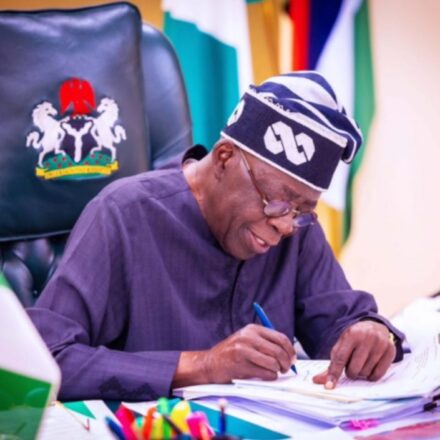
The original $750m financing for DARES was approved on December 14, 2023, under President Bola Tinubu’s administration.
However, the project became effective on November 15, 2024, allowing implementation activities to commence.
The initial financing arrangement comprised $600m in shorter-maturity loans from the International Development Association (IDA) and another $150m in IDA credit.
Under the proposed additional financing, the credit component is expected to increase from $150m to $650m, while the $600m loan component will remain unchanged.
If approved, the arrangement will increase the World Bank’s total financial commitment to the project from $750m to $1.25bn.
The increase is expected to provide additional resources for expanding renewable electricity infrastructure and improving access in underserved communities.
DARES Project Cost Rises to $2.94bn
The proposed financing expansion will also increase the overall estimated cost of the DARES programme.
According to the World Bank document, the revised project cost is expected to reach $2.94bn, compared with the previous estimate of $2.06bn.
This represents an increase of approximately $880.2m, equivalent to 42.71 per cent.
The additional funding is expected to come from several development partners and commercial financiers.
Apart from the proposed $500m World Bank financing, the French Development Agency is projected to contribute another $116.2m, while commercial financing is expected to provide $264m.
The additional commitments are expected to increase total commercial financing under the programme from $1.028bn to $1.292bn.
Other financing arrangements include:
-
$193.8m from the Japan International Cooperation Agency (JICA).
-
$49.1m in trust fund resources contributed through a United States Department of Justice-supported fund.
-
$40m from other development partners.
The combined financing arrangements are expected to strengthen the programme’s capacity to expand distributed renewable energy infrastructure across Nigeria.
The World Bank’s Country Director for Nigeria, Taimur Samad, endorsed the latest project document on November 13, 2026, following an appraisal conducted on October 23.
The proposed additional financing now awaits consideration by the bank’s Board of Executive Directors on December 18, 2026.
If approved, the funding will represent another major financial commitment towards addressing Nigeria’s electricity access deficit through renewable energy and private sector-led power generation.