






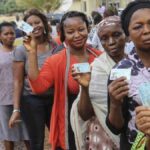

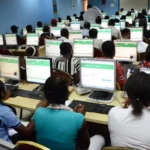
















The Independent National Electoral Commission (INEC) has announced plans to conduct a nationwide mock accreditation and voting exercise on November 28, 2026, as part of preparations for Nigeria’s 2027 general elections.
The exercise is expected to take place across all 36 states and the Federal Capital Territory (FCT), with the commission planning to simulate a presidential election to assess its readiness for the forthcoming polls.
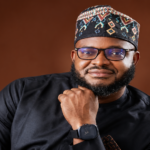
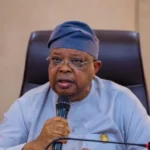
INEC Chairman, Professor Joash Amupitan, disclosed this on Thursday during a conference at Chatham House in London, where he discussed Nigeria’s democratic trajectory beyond the ballot ahead of the 2027 elections.
According to Amupitan, the exercise will enable the commission to test its accreditation procedures, electoral technology and transmission of election results before the general elections.
“On the 28th of this month, we are planning a mock accreditation and voting across all the states in Nigeria, so that we simulate a presidential election and just be sure that we have gotten it right and that there will be transmission of result,” he said.
INEC Plans Improvements After 2023 Elections
The INEC chairman said the commission had reviewed challenges recorded during previous elections and introduced measures to improve the electoral process.
He identified the 2023 general elections and subsequent off-cycle governorship elections in Anambra and Osun states as important learning experiences for the commission.
Amupitan maintained that every election provided an opportunity to identify shortcomings and improve the commission’s operations.
“Nigerians must trust me because I’ve done off-cycle elections, and you agreed the last election in Osun State, there was improvement, and I said every election is a lesson. 2023 election was a great lesson for Nigeria. The one we had in Anambra was another,” he said.
He explained that INEC was working to improve logistics and ensure that voting activities and the declaration of results were completed promptly.
The chairman cited the Anambra governorship election as an example, noting that the commission declared the results the following day.
“We are trying to improve on logistics to ensure that everything is done within the day, and then result. Look at the way we did an Anambra election. By the following day, we declared the result,” he stated.
Amupitan also referenced elections in the Federal Capital Territory and Osun State, highlighting improvements in the deployment of the Bimodal Voter Accreditation System (BVAS) and electronic transmission of results.
He said the commission was committed to preventing a recurrence of electoral challenges experienced in previous polls through better planning, transparency and an auditable process.
INEC Removes AI-Generated Photos From Voters’ Register
Meanwhile, INEC has disclosed that it removed questionable artificial intelligence-generated photographs uploaded to the national voters’ register and identified officials allegedly involved in the practice across about 10 states.
INEC National Commissioner and Chairman of its Information and Voter Education Committee, Mohammed Kudu Haruna, disclosed this on Wednesday during a webinar organised by the PUNCH Media Foundation.
The webinar was themed, “AI, Misinformation and Nigeria’s 2027 Elections: Safeguarding the Truth, Protecting the Vote.”
Haruna described the development as one of the challenges confronting the electoral commission as it prepares for the 2027 general elections.
He explained that investigations had established that some INEC personnel were involved in uploading manipulated photographs into the voters’ register.
According to him, the commission had already removed the questionable images and flagged the affected officials for disciplinary action.
“We have already seen one of the challenges, which is that a lot of AI-generated photographs were posted onto the voters’ register, which, as we have said, we have had to take down,” he said.
Haruna acknowledged that INEC might find it difficult to prevent members of the public from digitally manipulating their photographs before uploading them during registration.
However, he stressed that the commission had greater control over cases involving its own personnel and would take appropriate action against those responsible.
“But the ones involving our own staff, where it is our own staff that did so, that one is within our control. We are in the process of addressing it. They have been flagged,” he added.
The national commissioner further disclosed that INEC had obtained the names of the affected officials across approximately 10 states.
He assured Nigerians that the officials would face disciplinary measures over their alleged involvement.
“We have their names across about 10 states, and obviously, they are going to face disciplinary action,” Haruna said.
INEC Faces Fresh Technology Challenges Ahead of 2027 Polls
The development has added another dimension to concerns surrounding the integrity of the voters’ register and the use of emerging technology in Nigeria’s electoral process.
INEC had earlier acknowledged concerns over suspected AI-generated photographs in the preliminary register of voters and commenced a review of questionable records.
The commission clarified that the preliminary register was not the final certified document and that its verification and data-cleanup processes were intended to address irregularities before certification.
INEC has also indicated that it is developing an artificial intelligence policy to guide its approach to the technology and address emerging challenges.
With the November 28 mock accreditation and voting exercise approaching, the commission is expected to use the exercise to assess its operational readiness, test electoral technology and identify potential weaknesses before the 2027 general elections.
The planned exercise and the investigation into manipulated voter photographs form part of the wider preparations to strengthen the credibility, transparency and integrity of Nigeria’s electoral process.