






































The cost of transportation using Compressed Natural Gas (CNG)-powered vehicles is expected to decline as more gas refuelling stations become operational across Nigeria, the Midstream and Downstream Gas Infrastructure Fund (MDGIF) has assured.
The Executive Director of MDGIF, Mr Oluwole Adama, gave the assurance during an interview on the sidelines of the commissioning of a Liquefied Compressed Natural Gas (LCNG) station in Hotoro, Tarauni Local Government Area of Kano State.
Adama was responding to concerns that some commercial transport operators using CNG-powered vehicles continue to charge passengers the same fares as drivers using Premium Motor Spirit (PMS), popularly known as petrol.
He attributed the situation to the early advantage enjoyed by existing CNG operators, expressing confidence that increased competition would eventually force transportation costs down.
According to him, the expansion of gas infrastructure and the entry of more operators into the market would allow market forces of demand and supply to determine prices.
“Well, it is a first-comer advantage they have. For we have the traction, we talk of demand and supply. So, when we are opening more of this, very soon they won’t have a place, competition will drive it down,” he said.
Adama added that the benefits of increased competition would eventually extend to Nigerians through more affordable transportation.
Kano Commissions Three New LCNG Facilities
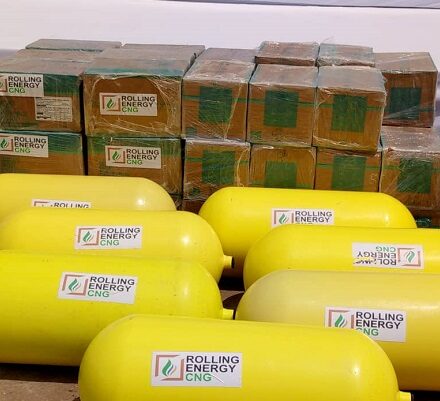
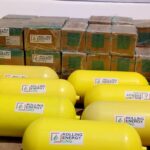
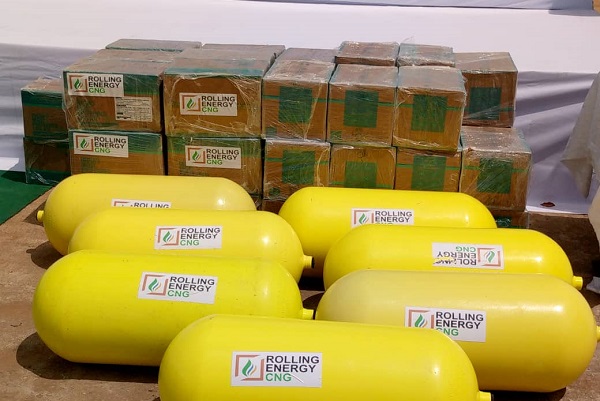
The assurance came as the Minister of State for Petroleum Resources (Gas), Rt. Hon. Ekperikpe Ekpo, commissioned three gas infrastructure facilities developed by Rolling Energy Limited with support from the MDGIF.
The facilities comprise an LCNG distribution hub and retail station at Tamburawa, in Dawakin Kudu Local Government Area, and an LCNG daughter and retail station at Hotoro, in Tarauni Local Government Area of Kano State.
Declaring the facilities open, Ekpo described the projects as an important step towards expanding domestic gas utilisation and improving access to cleaner and more affordable energy.
“It is therefore my honour and privilege to commission the Tamburawa LCNG Distribution Hub, the Tamburawa Retail Station and the Hotoro LCNG Retail/Daughter Station, for the benefit of the good people of Kano State and the Federal Republic of Nigeria,” the minister said.
According to Ekpo, the first facility at Tamburawa is a 300,000 standard cubic metres per day LCNG distribution hub equipped with LNG storage, regasification and CNG distribution capabilities.
The facility can also supply gas to daughter stations, while the second project at Tamburawa is a retail outlet designed to bring the benefits of the infrastructure directly to consumers.
At Hotoro, the minister commissioned a 21,000 standard cubic metres per day LCNG daughter and retail station designed to improve gas accessibility for end users.
Ekpo said the three facilities reflect the government’s strategy of developing gas infrastructure alongside retail distribution outlets to ensure that Nigerians can access domestic gas.
Tinubu Government Targets Wider Domestic Gas Utilisation
The minister said President Bola Tinubu had consistently emphasised the need to translate Nigeria’s abundant natural gas resources into tangible economic benefits for citizens.
According to him, the administration’s priority is to move from policy formulation to actual infrastructure development that delivers affordable energy to households, businesses, industries and the transportation sector.
He said the Kano projects would deepen gas penetration in the state and surrounding areas, provide cleaner energy alternatives, support businesses and transportation, stimulate economic activities and create employment opportunities.
Ekpo also highlighted the importance of the MDGIF in mobilising private-sector investment for critical gas infrastructure.
He maintained that government efforts must go beyond developing policies to catalysing the private capital and infrastructure needed to deliver practical benefits to Nigerians.
CNG Offers Significant Savings Over Petrol in Kano
Speaking at the commissioning, Adama described Kano as a major centre of trade, manufacturing and transportation, noting that thousands of vehicles transport passengers, agricultural produce and manufactured goods through the state daily.
He said reliable access to natural gas could significantly reduce operating costs for transporters and businesses that depend on road transportation.
Adama disclosed that the MDGIF had partnered with Rolling Energy Limited to develop 18 retail gas infrastructure facilities across three states and the Federal Capital Territory.
He described the Kano commissioning as part of the broader effort to expand CNG availability and accelerate the adoption of gas-powered transportation.
According to him, the Tamburawa LCNG mother station converts liquefied natural gas into compressed natural gas, refuels vehicles directly and supplies other refuelling facilities, including the Hotoro daughter station.
He said the combined facilities could refuel up to 2,500 cars and tricycles daily, significantly reducing waiting times for commercial transport operators.
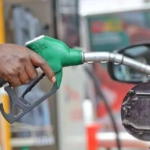
Adama illustrated the potential savings by comparing petrol and CNG prices in Kano.
He said petrol was selling for approximately ₦1,420 per litre, while the equivalent amount of energy from CNG cost about ₦600.
Using the example of a commercial tricycle operator consuming the equivalent of 10 litres of petrol daily, he explained that the operator would spend ₦14,200 on petrol compared with approximately ₦6,000 on CNG.
This represents a daily saving of ₦8,200 and potentially close to a quarter of a million naira monthly, depending on operating days and actual consumption.
Adama said the savings could help transport operators meet household expenses, pay school fees and invest in their businesses.
New Stations to Support Heavy-Duty Trucks
Beyond commercial cars and tricycles, Adama said the facilities were designed to support heavy-duty transportation.
He disclosed that the stations could collectively refuel up to 200 trucks daily, providing an alternative energy source for vehicles transporting agricultural produce and manufactured goods from Kano to other parts of the country.
He highlighted the importance of the infrastructure to the movement of grains, onions, livestock and manufactured products to destinations such as Lagos, Port Harcourt and Maiduguri.
The MDGIF executive director also said the Tamburawa facility’s gas-handling capacity of 300,000 standard cubic metres daily represented a significant addition to the state’s energy infrastructure.
Rolling Energy Highlights Expansion Plans
The Chief Executive Officer of Rolling Energy Limited, Mr Mubarak Umar Danbamta, said the company’s expansion journey began in Ilorin, Kwara State, before extending its operations to Abuja and Kano.
He recalled that the company had previously developed gas infrastructure in Ilorin, including facilities supported by LNG storage tanks and CNG daughter booster stations.
Danbamta said the company was continuing to expand its gas distribution network through partnerships, including its collaboration with the MDGIF.
He disclosed that the Hotoro daughter station has a storage capacity of eight metric tonnes and that both facilities being commissioned can regasify LNG and dispense CNG.
The expansion is expected to strengthen the availability of natural gas for transportation and other commercial applications.
With more CNG and LCNG infrastructure expected to enter operation, the government hopes increased supply and competition will eventually translate into lower operating costs for transporters and more affordable fares for passengers.